Thursday, March 21, 2013

Kill, superhero! Kill!


It's only been in the last few months that I've returned to reading superhero single issues as they're released, and my tastes proved shamefully one-sided. I dipped my toes into the new 52 and found very little to my taste, while I've been more impressed than I could have imagined with Marvel NOW!

One thing I'm not happy with is how the notion of superheroes killing criminals has clearly become more acceptable over the years particularly, it seems, in Marvel.

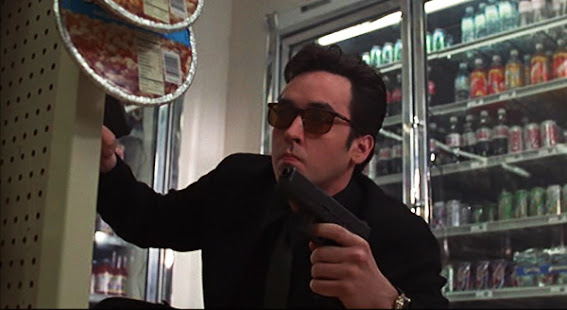
Now the example pictured above is a special case and, in fact, isn't entirely what I'm talking about. That's Doc Ock in Spider-Man's body about to blow away the amoral villain Massacre in Superior Spider-Man #5 (and I'm enjoying that title way more than I thought I would when I first learned of the concept). Ock/Spidey killing someone isn't particularly surprising, but what I found interesting was part of the fallout in Superior Spider-Man #6.


It wasn't all that long ago that it wouldn't have even been a question whether or not a superhero who killed someone would stay in the Avengers. An Avenger who had killed would, at the very least, be subjected to a court-martial-type deal overseen by his/her teammates. In the case of Ock/Spidey here, who shot a man after he had already been defeated and could have easily been restrained? He wouldn't stand a chance.

For my most recent Extra Medium column over at Popdose, I wrote "The Top 10 Worst and Best Things About The Avengers" (I really do need to get another one out). Under "worst" I talked about how I didn't like seeing the superheroes in the flick killing people. Of course, they're justified. They're fighting a war and for most of the movie, they're on the losing side. Or at least the side with the biggest disadvantages.

What bothers me more is that there's killing without any discussion of killing. It's casual. When I was younger if a superhero killed someone, or even seriously considered killing someone, it would consume them. It would impact them for years. When Captain America shot and killed a terrorist during Mark Gruenwald's classic run, it was one of the many events that ultimately led to Steve Rogers being temporarily stripped of his title, costume, and shield by the US government. More importantly, it was a kidney shot to Cap's soul.

Now, it doesn't seem to bother anyone much. Sometimes it's even just something mentioned in passing. Hawkeye pierces a few throats while rescuing Spider-Man in Age of Ultron #1. In a scene meant to be - at least in part - humorous, Maria Hill shows a man photos of the Hulk ripping a skrull in half in Indesructible Hulk #3. Shanna the She-Devil accidentally kills a Savage Lands tribesman who was attempting to peacefully communicate in Savage Wolverine #3, the scene is treated like slapstick, and when the justifiably enraged tribal warriors attack Shanna and Wolverine, they have no problem using more lethal force in retaliation.

I don't want to start a debate. I think the ship sailed a long time ago unfortunately. But I do want to say two things.

First, ultimately, life is what is of primary concern to the superhero. That's why the term "crime-fighter" has always been incomplete. Bruce Wayne doesn't become Batman because Joe Chill broke his mother's necklace. Peter Parker doesn't become Spider-Man because that crook he let walk got away with too much dough. Superman doesn't dole out parking tickets and Dardevil doesn't give a crap out used car salesmen unless they start killing people. Superheroes care about life, plain and simple. They don't just face death. They wrestle it. And I think to allow characters whose primary enemy is death itself to dole it out is a betrayal of the very concept of the superhero.

Second, earlier this evening I watched part 2 of the animated adaptation of Batman: The Dark Knight Returns, and it was this that inspired this post.

See, what impressed me the most about the adaptation of DKR is the raw power of the source material. The story is almost 30 years old, and along with Watchmen it's suffered many copycats over the years. In spite of all the dark, violent, and edgy superhero comics that came out between the release of the original DKR series decades ago and its more recent adaptation, it remains absolutely goddamn brutal. You will wince when you watch scenes like Batman's bone crushing battles with the Mutant Leader, or his final dance with the Joker.

Yet, in spite of how brutal it is, in spite of how dark and violent, in spite of how its originality and innovation radically changed the landscape of superhero comics; in one of the first scenes of Batman: The Dark Knight Returns, Part 2 Batman saves a liquor store owner from a bunch of thugs and when he sees the shop owner about to kill one of the thugs, he turns on him and says, "Pull that trigger, and I'll be back for you."

So if you're going to tell me that superheroes need to kill in order to be believable, interesting, or modern, save your breath. Because DKR gave us a superhero darker, edgier, a million times more brutal, and certainly more interesting than anything that ever went in or out of Avengers tower, and even he wouldn't cross that line.


Sunday, March 17, 2013

Avengers Arena, reviewing ethos, and hypocrisy (that would be mine)


I was surfing a little bit and found myself at Johanna Draper Carlson's blog. While scrolling through her posts, I followed a link to a column by KC Carlson in which the columnist talks about  his likes and dislikes from Marvel NOW!

What struck me the most was what he wrote about Avengers Arena, a comic in which a bunch of younger heroes from titles like Runaways and Avengers Academy are transported to an island by the X-Men villain Arcade and told to fight to the death:

I’ve already dropped Avengers Arena, after giving it five issues (four too many). I will award it Most Tasteless Title of this year, however, as it’s a comic book snuff film, with a bunch of B- and Z-level characters brought together just to be killed off issue by issue. I imagine that younger readers who like first-person-shooter games and other death-happy fare will quite like this. As an older person who’s had to deal with the consequences of real-life deaths, I find this whole genre most offensive. And sad, now that my favorite comic book franchise has succumbed to it.
Carlson's reaction didn't surprise me. I felt similarly when I first learned the concept behind the book. But as I gave it a chance, I grew to like it, and found myself feeling similarly to Robot 6's Carla Hoffman. As Hoffman says, the premise of Avengers Arena "feels cheap," but the title ends up being more than just "a comic book snuff film." It has great characterization, powerful and emotional moments that have nothing to do with violence, and on a personal note it's reinvigorated my interest in Marvel's teen hero books.

Now let's forget the fact that the issue at which Carlson apparently gave up on the title (Avengers Arena #5) doesn't actually feature any character deaths. And let's forget about the fact that if he thinks this is the most tasteless title of the year, he needs to check out the new Deadpool, or Marvel's 156th Thunderbolts reboot, or that widely publicized DC event culminating with possibly the most recognizable child superhero in the world being riddled with more bullets than Al Pacino at the end of Scarface and skewered by a giant goddamned sword.

But this: "I imagine that younger readers who like first-person-shooter games and other death-happy fare will quite like this. As an older person who's had to deal with the consequences of real-life deaths, I find this whole genre most offensive." This is not what I expect from a reviewer. This is what I expect from an angry Facebook user. This is not a valid criticism of the content of a comic or the creativity and artistry of its creators. This is taking the easy road. This is saying that something you don't like isn't good because you're superior to the people who enjoy it. This is making things personal.

And what bothers me more than anything is that I know I've done it myself a shit-ton of times. I know I'm catapulting huge boulders inside a glass castle if I trash KC Carlson for doing it. No BS, I've seriously considered going through my blog's reviews and eliminating anything I judge to be "making things personal." The only reason I haven't done it is because I don't know if I'm more of an ass leaving stuff like that up, or hiding it so no one calls me out on it.

I don't know, I think I started this wanting to thrash a reviewer over a couple of sentences that rubbed me the wrong way, and realized I clearly had nowhere to go because I was being a hypocrite. I genuinely don't think what Carlson wrote is a really fair review, but again I don't think I'm innocent of it either. I've been writing reviews of comics for over a decade, and I know without checking that there's no way I haven't crossed a similar line. Maybe it's about time I take a step back and think about whether or not I should have a more defined ethos towards my own reviewing.

P.S. For the record I have dealt with real-life consequences of death. Yeah, I like some first-person-shooters. But, you know, so does Kevin Spacey's character in House of Cards. And that guy's practically Vice President. So, yeah. Check, and mate (not really).

Friday, March 01, 2013

Crisis on Infinite Bed & Breakfasts


Last weekend my girlfriend and I had a wonderful time in the Berkshires. We couldn't afford a long vacation or one spent very far away, so we opted for an overnight trip.

Because it was its final weekend, we decided to make a visit to the Alex Ross exhibit, Heroes and Villains: The Comic Book Art of AlexRoss, at the Norman Rockwell Museum in Stockbridge, Massachussetts. Other than the art Ross created as a boy, there wasn't much at the Ross exhibition I hadn't seen already in one form or another. But the art from Ross's childhood - including a Justice League made from construction paper and scotch tape and a recreation of the Peanuts characters all as DC heroes -was worth the price of admission all on its own.

After the museum we drove to Lee to check into the Federal House Inn. It was my first stay in a genuine B & B. Our room was the Crabtree Room. It had a television that looked like it could've been someone's desktop monitor 5 minutes before they brought it into the room, a toasty gas fireplace, floors dangerously slippery to anyone barefoot or in socks, a four poster bed we practically needed a stepladder to climb into, and a stand-up shower with the most perfect water pressure. I defiantly declared to my girlfriend that I would shower both at night and in the morning. Caring about it seemed a challenging prospect to her. In the evening there was wine and cheese on the first floor; and for breakfast we were served a tasty fruit salad, stuffed french toast, and maple flavored bacon for which I would fight any man.

Of the images familiar to me at the Alex Ross exhibit, one of the most striking to behold on a museum wall was the cover for the more recent editions of DC's Crisis on Infinite Earths. And it was fun to listen to the commentary from museum visitors who knew a little bit about the comics, but not quite enough. I bit my tongue as three women looking at the picture argued about whether or not one of the twin Supermen was Bizarro.

For some reason, the fact that Crisis was the first of the big superhero crossover events inspired me to begin designing my own Bed & Breakfast. Just as The Federal House had different names for all their rooms, the fusion of the B & B and Ross Exhibit experiences inspired me to mentally construct a bed & breakfast with rooms named and themed after major Marvel and DC events.

The Crisis on Infinite Earths Room would be the largest room in the inn, having been constructed by knocking down walls from four adjoining rooms and merging them into one.

The Secret Invasion Room would be filled with ingeniously disguised furniture. All the necessaries of any home-away-from-home would be there, but you wouldn't know what it was. The lamp would actually turn out to be the bed. The TV would be the complimentary shampoo. The rug would be the envelope provided for cash tips. The toilet would just be a toilet because why be gross?

The Onslaught Room would be reserved for members of a very low-effort version of the Witness Protection Program. Upon the guests' entry to the room, friends and family will be notified of the guests' deaths. In fact, the guests' memories will be erased and they will be spirited away to a completely different land to start new lives. But with the same exact names for some reason.

The Secret Wars Room would not be a room anyone could reserve. Rather, the best and worst guests from other rooms would be secreted from their beds to the Secret Wars Room to battle for the privilege of naming the items on the breakfast menu.

The Civil War Room would be reserved for combative couples arriving a few months after their promised check-in date.

The Death in the Family Room would be indistinguishable from other rooms, other than that during your stay it would seem horribly important and impacting, but twenty years later you'd realize it really didn't make a difference.

The World War Hulk Room would just strut around and beat up other rooms.

The Our Worlds at War Room would be normal in almost every way, except you will be subjected to a constant voice-over lecturing you about World War II even though nothing you will doing will have anything to do with that.

The Fall of the Mutants Room would not even really be a room, but you'd play along anyway.

The Identity Crisis Room would be filled with fishnet stockings, bondage gear, and buckets for all the incredibly necessary vomit.

The Atlantis Attacks! Room would have the worst bathroom ever.

The Infinite Crisis Room would be stupid.

While coming up with these rooms, it occurred to me that even if I were serious, that my desire to run a B & B would start and end with making up names and themes for the rooms. Once I did that, I would lose all interest. In fact, I already have lost interest. Now I'm thinking about cheese.

I'm lying. Boobs. I'm thinking about boobs.

Sunday, February 17, 2013

Learning to Love Star Trek: The Next Generation, Part 4

Part 1
Part 2
Part 3

Quick Recap: I was all like,"TNG is crap!" Alan Doane was all like, "DUDE." And then he was all like, "Well what about these, douchenozzle?" And I was all like, "Okay, whatevs, I'll watch 'em."

At least, that's how the conversation was reported by the History Channel.

Oh, and by the way, Alan has started a new blog dedicated to Star Trek called Star Trek Galaxy. Check it out!


"In Theory"
Season 4, Episode 25
Directed by Patrick Stewart

When Lt. Jenna D'Sora breaks up with her boyfriend, she finds a possible replacement in her superior officer, the self-aware android Data. Intrigued by the notion of pursuing a romantic relationship and convinced it's an important stepping stone in his goal to achieve humanity, Data does his best to emulate a human partner.

It surprised me how much I enjoyed "In Theory." Data's attempts at being a genuine boyfriend are often pretty funny, though the story pulls the rug out from under you in the end. Contrary to the usual course of these sorts of Data-as-tin-man episodes, the boundaries between Data and humanity are made perfectly clear. There is no smirking hint of hope that, just maybe, Data will realize his dream or that maybe in some small way he already has. "In Theory" ends with little ambiguity. This guy is a toaster oven. Deal with it.

It's these Data-wants-to-be-human episodes that often bother me more than just about anything else in Star Trek: The Next Generation and the other Trek series.

First, I doubt there's still anything new left to say about this robot wanting to not be a robot. Data's story was tweaked a little bit and copied not once but twice in Star Trek: Voyager with both The Doctor and his more attractive sequel, Seven of Nine. When someone finally found a way to do something interesting with Data in Star Trek: Generations - by giving him emotions coupled with the emotional stability of a toddler - it was quickly undone in Star Trek: First Contact by giving Data the ability to turn his emotions on and off with a little bend of his neck.

Second, one of the things I enjoy most about Star Trek is the ingenuity its creators show in making such outlandish stories relevant to real people, and I don't see how the question of whether or not an android can force himself into becoming a real person is relevant to me. I know some people are genuinely worried about machines becoming more like real people, but I tend to see them as conspiracy theorists who are trying to come off as intellectuals because they saw Terminator.

Third and finally, it's frustrating to me how the people around Data react to his lack of humanity. And in fact, while I enjoyed it, "In Theory" is a wonderful example. Lt. D'Sora constantly lectures Data about how humans do this and how humans do that. Throughout the series, different members of the crew complain to Data about how little he knows of what it's like to be human. This bugs me on two levels: A) It seems like an easy way for the writers of TNG to come off as deep, i.e. explaining what it's like to be human to a toaster oven will always impress the toaster oven B) How long have these idiots hung out with Data? Why are they still surprised and angry about the toaster oven being a toaster oven?

That's why it's the ending of "In Theory" that really made it for me. His cold, obliviously uncaring reaction to his relationship with D'Sora ending was perfect. It was disarming, disturbing, and it was exactly what it should have been.


"Darmok"
Season 5, Episode 2
Directed by Winrich Kolbe

Sometimes the universal translator just isn't enough.

(Honestly since it's a device I've never seen and - after watching quite a few episodes of Star Trek and its various spin-offs, as well as all of the Trek films - am completely ignorant of where it's supposed to be located, it's a surprise the thing doesn't prove inadequate more often).

Such is the case when the Enterprise meets with a Tamarian ship in orbit of the planet El-Adrel. While Picard and his crew can understand individual words from the Tamarians, their phrases seem like absolute nonsense. Likewise, the seemingly well-meaning Tamarians can't make heads or tails of Picard's words. The Tamarians shock the Enterprise crew by transporting their captain, Dathon, to the surface along with Picard while the Tamarian ship projects an energy field around the planet that prevents the Enterprise from beaming her captain back to safety.

On the planet, Dathon invites Picard to what Picard believes is a violent duel. Dathon offers a knife to Picard which the federation captain steadfastly refuses. After a creature of shimmering, lightning-like energy attacks the pair, Picard begins to unravel what's going on. He realizes the Tamarian language revolves around story and metaphor. When Dathon offers Picard a torch to help him start a campfire, for example, rather than saying, "Take this," or something similar, the Tamarian says, "Temba, his arms wide," with Temba presumably being a figure in Tamarian myth or legend. Likewise, when Dathon first offers Picard the knife (and many times after) he says, "Darmok and Jalad at Tanagra." With Dathon's help, Picard concludes that there is a story in Tamarian legend of two hunters - Darmok and Jalad - who travel to the island of Tanagra and battle a beast. Dathon's intent, Picard realizes, was for the two captains to do the same and bring their cultures closer as a result.

Unfortunately, by the time Picard gets a clue, Dathon is already mortally wounded. Aboard the Enterprise, Data and Troi work to solve the riddle of the Tamarian tongue while Riker exhausts every avenue to rescue Picard; wanting desperately to avoid combat with the Tamarian ship. Eventually Data and Troi come to the same conclusions as Picard about the Tamarian tongue, but since they don't know the stories upon which the Tamarian language is based, there's still no way to communicate. Feeling backed into a corner, Riker eventually attacks the Tamarian ship; hoping only to damage it enough to take out the energy field and beam Picard back to the Enterprise. They beam Picard aboard who, with his newly acquired understanding of the Tamarian tongue, manages to placate the Tamarians and relate the news of their captain's death.

I enjoyed "Darmok" quite a bit. The idea of a race communicating completely through metaphor is fascinating and innovative. And overall it's refreshing to see the crew of the Enterprise deal with a breakdown in communication, especially since I've always felt ambivalent about the notion of the universal translator. On one hand you could certainly argue it may be a somewhat lame device, but a necessary one for the stories Star Trek's creators tell. On the other, I can't help but wonder if the franchise's stories wouldn't be much more interesting if the language barrier were intact.

One thing about the premise can't help but bother me. I really don't want it to bother me, and instantly recognize it as the kind of problem I might sigh at if someone else mentioned it, but it's there and I can't deny it. The Tamarians seem unable to understand words unless they're used in reference to their stories. For example, they may understand the phrase, "Temba, his arms wide," but if you were to use the word "his" or "arms" or "wide" in another context, they'd be confused. If that's the case, if their language is composed completely of metaphor, then how were they ever able to tell the stories to one another in the first place? How could they ever learn the stories that make the foundation of their tongue unless they had some understanding of the words outside the context of their stories to begin with?

I guess it could be a chicken-or-the-egg type deal, in which case I wouldn't necessarily call it a weakness. Real life is full of paradox. It's just something that needles at me a bit whenever I watch it.


"Cause and Effect"
Season 5, Episode 18
Directed by Jonathan Frakes

The Enterprise is caught in a time-loop. The same things keep happening. During a poker game, Dr. Crusher is called away to help Geordi in sick bay. Later that night she's disturbed in bed by a cacophony of muffled, ghostly voices. She tells Picard and the other officers about this during a senior staff meeting the following day and reveals there were other reports of Enterprise crew members hearing the same voices. The staff is called away from the meeting because of the discovery of a space-time anomaly. The anomaly takes out the ship's main power and another federation ship appears from the anomaly on a collision course with Enterprise. Since her thrusters won't respond, Riker suggests decompressing the main shuttle bay to move Enterprise out of the unidentified ship's path. Data suggests they shove the other ship away with a tractor beam. Picard goes with Data's advice and the unnamed ship hits Enterprise anyway. Picard has just enough time to order all hands to abandon ship before the ship explodes.

And then it all happens again. And again. And again.

Etc.

Somehow, you're not bored. That's what most impressed me about the episode. Each trip around the loop starts right from the beginning; from the customary shot of the Enterprise slowly cruising through space and Picard's dictation of the log. But in spite of watching the same scenes play out repeatedly, it doesn't get stale. Throughout the episode I thought it was a testament to how much a different camera angle can change a story. Without those different angles, "Cause and Effect" would've seemed like little more than a broken VHS tape. Instead, it's an interesting, suspenseful episode.

And as a cherry-on-top, Kelsey Grammer shows up as the time-lost captain of the other unnamed federation ship. Not that I'm a huge fan or anything, but it's just kind of cool. The episode ends with a "Hey look! Frasier!"


"The Inner Light"
Season 5, Episode 25
Directed by Peter Lauritson

Moments after the crew discovers an unidentified probe, Captain Picard collapses on the bridge.  Less than a half hour later, he's lived a lifetime.

After Picard falls unconscious on the bridge of the Enterprise, he wakes up in a humble, unfamiliar home. A woman called Eline claims he's her husband, calls him Kamin and says he's recovering from an illness. Initially, Picard clearly thinks the woman is behind something nefarious. His only concern is to find out where he is, who's behind his transportation away from his ship, and how to get back. Shortly after a cut back to the Enterprise, we return to the planet - Kataan (fellow board game geeks, calm down) - and some years have passed. And they keep passing. Eventually, Picard all but forgets the Enterprise. He learns to play the flute, has two children with Eline, and studies the planet Kataan, which he's convinced is dying. He is an old, forgetful man when his time on Kataan ends. Eline has died and his daughter has given him a grandchild. His daughter brings him out to watch the launch of the same probe Picard's ship encountered so many years ago; or what seemed like so many years ago to Picard. As Picard waits to watch the probe launch, dead friends and loved ones appear to him and finally reveal what's been happening. The people of Kataan died a millenia ago. Knowing their end was coming, they launched a probe that would keep the memory of their culture alive. While Picard has felt the passage of years, in reality his world is one the probe created in his mind.

Once Picard revives on the bridge of the Enterprise, he's like a newborn or an amnesiac. He has to think to remember the names of his crew members and the ship seems like a dream.

Of the TNG episodes on Alan's list that I hadn't seen before I started writing "Learning to Love Star Trek: The Next Generation," without contest "The Inner Light" has proven my favorite.

It is more terribly and wonderfully bittersweet than any Star Trek episode has a right to be. Its power lay in something far too rare in the franchise: a focus on emotion and the human experience rather than examining the social, the political and/or morality. I'm not saying those things have no place in Trek. Clearly, the bold and powerful statements the franchise has made are an important part of the Star Trek legacy, but I think too often the notion of making the characters feel like real people who experience real things is forgotten.

Half way through "The Inner Light," I was convinced that ultimately a global warming message was forthcoming, but that wasn't the case. There's no preaching or heavy-handed messages. In fact, it's made clear the people of Kataan were not responsible for their demise and that there was nothing they could do to change their fate. The episode isn't about melting ice caps or endangered species; it's about Jean-Luc Picard finding the kind of life being captain of the Enterprise denied him. It's about appreciating life, no matter where it takes you. And the last few minutes will break your heart. After the probe frees Picard from his virtual other-life, it deactivates. The crew retrieves the probe and later Riker brings Picard what was found within. You will know what it is before you see it, and it will break your heart.

To be continued...

Sunday, January 06, 2013

Help Peter David

I'm fighting a bit of a cold, but decided I needed to get on the computer to try to help someone who's fighting something a hell of a lot bigger.

Peter David (or PAD as many of his fans know him) was the first person to make me realize comic books had writers; which is to say he was the first comic book writer whose work so impressed me that I was curious enough to find out his name. He wrote Incredible Hulk for 12 years - longer, as far as I know, than any writer has stayed on Incredible Hulk and much longer than most writers have stayed on any single title, especially these days - and impacted my creative life profoundly. He's written for shows like Babylon 5, novels for Star Trek, and for a while there he wrote pretty much every novelization of every Marvel movie. More recently, he's been writing Marvel's X-Factor. He is not only a wonderful writer but a man of admirable integrity who has a history of publicly thumbing his nose at the higher-ups when he thinks they're heads are up their asses.

PAD suffered a stroke recently and his wife Kathleen posted on his blog to let folks know how they can help. They have health insurance but there are significant charges their insurance simply won't cover, and apparently this is compounded by the fact that the stroke occurred at the end of the year.

Kathleen is asking folks to check out PAD's e-books available through ComicMix. The e-books available include The Camelot Papers, Pulling up Stakes Part 1 & 2, Darkness of the Light and Heights of the Depths. Buying these books is the most immediate way to help PAD, as his percentage of the money is higher and it gets to him quickly.

I don't have as much experience with PAD's prose work and I haven't read any of these books, but I did read his first two Sir Apropos of Nothing novels and both were hilarious, awesome reads. He has a sensibility and sense of humor not unlike Joss Whedon. Any fans of Buffy or Firefly would do well to check him out.

You can also buy some of his graphic novel collections through sites like Amazon and Barnes & Noble. Kathleen says this does help but, "that is very long term and isn't much per books but it does help especially the Marvel graphic novels he has written."

I am going to use this as an opportunity to spend money on graphic novels and books guilt-free, and I suggest you do the same.

If you're curious, I've written some reviews of PAD's Hulk work, my favorite being my piece of his historic final issue of Incredible Hulk. You can find the links below.

The Endless Finale: Peter David's Final Issue of Incredible Hulk

Hulk Visionaries: Peter David Vol. 1
Hulk Visionaries: Peter David Vol. 2
Hulk Visionaries: Peter David Vol. 3


Thursday, October 18, 2012

Movie Review: Looper


Looper
Directed by Rian Johnson

If you've ever seen an espionage thriller or a mafia flick, you've probably heard phrases like, "make him disappear," though the real life horror of falling prey to the mob likely feels less gentle than simply vanishing. In Looper's not-too-distant future, when the mob says they're going to make you disappear, they really mean it.

Joe (Joseph Gordon-Levitt) is a looper, and a looper is a very particular kind of assassin. Joe, and others like him, wait for bound victims to be sent to them from the future. As soon as they appear, the loopers kill them and dispose of the bodies. Even if the authorities should find any of the bodies or swipe some of their DNA, they'll be looking for someone who probably doesn't even exist yet.

Each looper comes with an expiration date. A looper goes into his job knowing that one day the victim sent from the future will be his own aged, future self; and he won't even know it until after the body hits the ground. He retires with a king's ransom and 30 years to spend it before the demons knock on his door.

The worst thing any looper could do is let his future self ecape or, as the loopers put it, "fail to close the loop." And that's exactly what happens to Joe when Old Joe (Bruce Willis) appears on the edge of the same cane field where Joe snuffs out all of his victims. Once Old Joe escapes, both he and the younger Joe are on the run from Abe (Jeff Daniels): a criminal sent from the future to organize the loopers. Meanwhile, Joe is hunting his future self in order to make things right with Abe and recapture his promised 30 years, while Old Joe tracks down a child who will one day become The Rainmaker - the future's most ruthless criminal - so he can kill him and reclaim the life with the wife (Qing Xu) who turned him away from crime and drugs.

What surprised me the most about Looper was how thoroughly director Rian Johnson went against audience expectation, and how refreshing it made the film. I expected the dancer/call-girl Suzie (Piper Perabo) to play the classic hooker-with-a-heart-of-gold whose impersonal charms would eventually reveal themselves to be a professional ruse hiding True Love; I expected Joe and Old Joe - like two dueling Marvel super-heroes - to knock heads at first but eventually join forces and work together toward a common goal; and more than anything I expected a Shyamalan-esque surprise ending involving the relationship between Joe, Old Joe, Old Joe's young target Sid (Pierce Gagnon) and hell maybe even Abe. In fact, while I was sold on buying tickets for Looper as soon as I heard the talent involved and the premise, the TV spots for the film made it come off as a slightly altered Inception, and again I was relieved that wasn't the case.

Johnson uses time travel as well or better as I've seen the concept wielded in any film. He makes it complex enough to remain interesting, but simple enough to remain accessible. Other than how Old Joe's memories are changing because of his trip to the past, Johnson gives us very little exposition about the mechanics of time travel and just lets us figure out the results ourselves. When Joe's friend Seth (Paul Dano) lets his own future self (Frank Brennan) go free, Abe's goons capture Seth and use torture to send messages to Old Seth. In a brilliantly grisly scene, scars appear on Old Seth's arms in the forms of written messages, and as Old Seth races to save his younger self, he comes apart at he seams.

All of the actors bring their A-games to Looper. The chemistry between Gordon-Levitt and Willis is perfect, and Willis has never played a more tragic character. His performance in Twelve Monkeys is one of my favorite of his; one of the reasons I was thrilled to see him back in another time-travel flick. While Jeff Daniels's part is relatively small, he renders Abe funny, chilling, and utterly memorable. Emily Blunt wonderfully inhabits the role of mother and reformed drug-addict Sara.

But the biggest acting surprise of Looper is the young Pierce Gagnon. Child actors just aren't supposed to be this damn good. Gagnon is creepy, touching, cute, and just so freaking impressive as Sid. So much of our appreciation of the film depends on whether or not we care about Sid, and it's impossible to not believe Gagnon's performance. I won't be surprised if we see an older Pierce Gagnon holding tiny little golden statues one day.

Looper is a thrilling, intriguing, and genuinely moving sci-fi action film. It finds an easy home in the ranks of films like Bladerunner and The Matrix representing the very best of science-fiction on the screen. I certainly never thought the director who brought us an impressive but thoroughly indie flick like Brick would offer up something quite like Looper to the table. It makes me thrilled to see what he'll do next. Meanwhile that goofy little kid from Third Rock from the Sun is quickly becoming one of my favorite actors.


Tuesday, September 18, 2012

A rambling, melodramatic, largely unedited, possibly adolescent (yet sincere) rant you should read if you are a friend

There are people in my life - people I care about, and people who care about me - who find me disgusting. This knowledge brings me strength.

I had a quiet, powerful moment the other morning. I drove into my work's parking lot, parked, cut the engine, and thought, I don't like the way I look. And I don't feel good. I should lose weight.

Just like that. I don't think I usually think like that; in Stephen-Kingy italicized sentences. I don't know that my thoughts usually form actual words. But this time they did.

I don't like the way I look. And I don't feel good. I should lose weight.

I weigh close to 360 pounds. I'm 38 years old. I have been fat for as long as I can remember; which is to say that for as long as I remember, I remember myself fat. Pictures reveal otherwise. It is kind of a dark miracle, and really if I manage to remove my emotions from the situation, it is almost life-affirming. I spent a long time thinking I was fat; and not just fat, but huge. I thought it so long, I made it true. Imagine if I had thought something else.

This is what I thought the other morning:

I don't like the way I look. And I don't feel good. I should lose weight.

And what was powerful about it was that for the first time in my life, I attached no judgment to those three simple truths. I did not think less of myself because of the way I look, because of the way I felt, or because I should lose weight. I simply acknowledged the truth of all three things.

The reason it was a first for me is simple. Therapy and drugs. I was recently prescribed an antidepressant, and one of the results is that a whole chorus of voices I never even knew were there have been bound, gagged, bagged, and tossed into the river. Not real voices, but just thoughts. Doubts, hang-ups, self-defeating debris. Whoever Trent Reznor was screaming about in "Mr. Self-Destruct" has been locked away. For the first time, I have just the barest inkling of what it would be like to be Bruce Banner in one of his precious calm moments, when he prays it doesn't happen again and he can just stay himself for a while.

I cannot and will not at any point in this (rant/confessional/essay/whatever) presume to be Ambassador of Fatdom. I can only say what is true for me. But it is tough to imagine that there aren't a lot of people out there who will be able to relate.

I am sure you have seen many films or tv shows, or even read books, about some poor fat kid who weathers a hurricane of insults and used that anger to turn himself around. He lost his weight and got the girl and wasn't everybody so impressed by him? And so yeah all those guys who beat him up and made fun of him were mean, but in the end, they kind of helped didn't they? He turned a lemon into lemonade! If you believe the wisdom of your favorite sitcoms offer valid life lessons, then I'm sorry someone is clearly forcing you to read something with way more syllables than you're used to.

One thing that is true for me, and which I imagine is true for most people struggling with their weight, is that negative reinforcement does not work. Never. No zit-pocked jock in my Christian/military high school ever helped me by calling me any number of embarrassing names I could list to you without blinking. No teacher or coach ever did anything with their snide remarks but keep the shit shoveling into my mouth that much faster.

Imagine, for example, exercise when you're 360 pounds. What must you look like? What must the people around you think of you?

I experienced this every day. I walk on a track on the ground floor of my office building every week day during lunch. The imagined thoughts of other walkers and onlookers usually crowd my head. Are they laughing at me? Do they think I'm gross? Are they thinking "Pfft, it's about time"? Are they thinking "Oh God, why can't those people just do it at home"? When I pass a group of walkers are they laughing about how I look from  behind? Do they think I only passed them because I'm trying too hard? Do they think I'm only walking this fast to impress them? Do those women think I'm trying to impress them?

I once suffered chest pains from acid reflux. But at the time I didn't know it was reflux, so I was given a stress test. While I jogged on a treadmill, I saw the doctor motion angrily at the nurse to leave the room. The nurse had been giggling while watching me jogging. Unfortunately, there's no hell. But hopefully, somewhere between then and now, someone punched her.

The day I experienced my powerful moment in the parking lot, my lunch walk brought no worries or concerns about the people around me. Just my music, my footfalls, and my breathing. The phantom thoughts of everyone else finally became just phantoms. I felt like I'd been sitting in front of a giant wind turbine that was finally switched off. I felt like Noriega must have when they finally hit pause on the Def Leppard. I wiped my face once with my sleeve and brought away water that wasn't just sweat.

I worked at a local NPR affiliate for over seven years. I was laid off last August. One of my least favorite parts of the job were the shows about nutrition; the call-in shows in particular. There are many self-righteous nutritional shows on NPR, and when we hosted call-in shows it was an invitation for every asshole in 7 states with a co-op membership and an energy efficient car to call in and drone about how healthy they were and, more importantly, how unhealthy everyone else was. The president of the station, who hosted most of these shows, was (and probably still is) notoriously self-righteous and insulting on the subject. He regularly called fat people "fatties." It was related to me that he was very impressed with me during a period when I successfully lost 80 pounds.

There were a lot of reasons for my lay-off. It was part of a larger series of cuts. At least one person in every department was laid off. But there isn't a silver tongue in the universe that will ever convince me that the fact that I eventually gained some of my weight back didn't have something to do with the fact that I was the only one chosen for the cut in my department.

Today, a friend (and he is a friend, and I certainly hope he remains so after this) posted  a link to a story about an increase in obesity across the country. Accompanying the link, he posted the following:

"I try not to get up on a soapbox on Facebook, but stories like this really get me agitated. At the rate we're going, in twenty years' time over half the population of America will be obese. Note the end of the first sentence of this article: "not merely overweight, but obese." In a healthy population, obesity should effect less than 10% of the total population. What the hell is going on?? Can you imagine the outrage if someone predicted that over half of Americans would be living below the poverty level by 2030? Or, better still if 50% of us were going to be homeless in 20 years. What if 50% of us would have cancer? Why are we all so complacent about a PREVENTABLE condition? This is to the point where we can't blame genetics anymore and America needs to get it's act together. We are killing ourselves."

Many comments followed, and at first most of them agreed with my friend. Of course, there's a lot to agree with. Obesity leads to bad stuff. It should be prevented.

But what followed - what my friend couldn't see, and as far as I can tell what my friend still doesn't see - was a series of smug, self-righteous rants designed to make the writers feel superior. They talked about how healthy they were. They talked about how healthy other people aren't. They talked about how big a problem it is, and asked why we couldn't just be more responsible. A few people talked about how the problem was that we're all too politically correct and fat people are coddled. The first time someone mentioned a factor that wasn't attached to personal responsibility - the fact that healthy food is much more expensive than unhealthy food, and that some people struggle just to feed themselves and their families any food and can't exactly afford to worry about whether or not its healthy,organic, locally grown super food that beats the shit out of any high fructose corn syrup it sees - it was brushed aside. No, no. That's not the problem. No one in the world knows the terrible, but rewarding burden of Personal Responsibility except for the respondents of this Facebook thread; this shining beacon of We-Do-Shit-We're-A'supposed-To-Do.

And then I said something.

I won't reproduce my words or the response. My friend responded. I don't think he agreed with my assessment of things, but at the same time he seemed genuinely concerned about my impression. There was one guy for whom just about every word that ends with "bag" would prove an accurate description. But that's okay. He'll be dead one day.

What was important isn't my response, but that I responded at all.

You might think that part of the result of my negative chorus of internal bullshit getting chemically rounded up and thrown into the clink is that this kind of stuff wouldn't bother me. I would just say "Oh, well ____ is clearly passionate about this, and that's his business. I'll just stay over here and keep shoving bowling balls of melted cheese into my face."

Quite the opposite. The chorus is still gone, but my friend's post still bothered me. What's different is that I wasn't afraid to tell him so.

See, for me, the only thing more scary than what people think about my fatness is what people will think of what I think about them thinking about my fatness. My social life is littered with this stuff. Co-workers, buddies, and dear friends - I mean lifelong friends even - have no problem spouting insulting, righteous garbage about how irresponsible and lazy fat people are. I never say anything.

The other day a co-worker was talking about how her daughter was being picked on at school and how she'd tried to placate her by saying those girls would be picked on once they got out of grade school. Her friend responded, "And tell her they get FAT! FAT! They get FAT!" She said it like she just spotted one and was pointing for the Gestapo to round 'em up.

I used to frequent a message board kept up by a group of friends. A strange, unique thread was kept for people to post things anonymously as confessions. Responses were discouraged. Someone posted that they felt guilty because they found themselves judging fat people all the time. They wondered how they did things like have sex. And while they felt guilty, at the same time they felt justified.

A dear friend and I were watching TV. A young, pretty girl on a talk show was complaining about her mother, how fat she was, how she was embarrassed to bring her friends around. Her daughter rattled on, pensive and mean, while her mother sat uncomfortably on a chair too small for her and cried into her hand. "What a little bitch," I said. "Well. She's right," my friend said.

And I never say anything. I never say anything because to reveal it bothers me reveals it bothers me. So not only am I fat, but I'm sensitive too. And in a time when being Politically Incorrect is, as far as I can tell, the new Political Correctness, the last thing you want to do is let anyone know they actually bothered you with words.

(I think the phrase I hear the most from people is "It isn't easy to offend me," and it's never true. NEVER.)

And that's why I responded to my friend, and to his friends, to let them know this is not okay.

Obesity is an epidemic. I don't dispute it. But I am so tired of feeling like as second class citizen compared to the rest of you. I am trying. I try, I fail, I try again. One of these days I will get it, and I hope you will all be happy for me. But it is not your business. And when I finally do get the weight I want, it will not be for you.

One of the dumbest things anyone ever tells me is, "Well at least you're trying." This is usually when they've said something rude about another fat person, and suddenly realize that for some strange reason, it might offend me. They offer that stupid little sentence as consolation. They never consider the notion that it's none of their business whether I'm trying or not. It's no more your business what I'm doing about my weight than what you're doing to improve things about your life.

I understand it. Unfortunately, my sins are the type that you don't need curiosity to figure out. You see my sins as soon as you see my shadow. It's impossible for you to not judge. My sins grow out of every inch of me.

I wonder what yours are.

Because of my therapy and my medical Hulk-restraints, I can finally face and acknowledge a difficult truth.

There are people in my life - people I care about, and people who care about me - who find me disgusting.

And as a result of the drugs and the therapy, I guess I think that's okay. My girlfriend told me once, "what other people think of you is none of your business." It's simple, but utterly true, isn't it? It is an idea I have tried to absorb into my life. It is difficult to feel, though I am beginning to feel it now.

And here, finally, comes the point to this long, rambling rant (if there even is any point). Part of keeping what you think about me your business falls on your shoulders, right? And guess what?

I'm not going to be quiet anymore.

I am not who I was yesterday. And I've got no more passes to hand out. I love you. You are integral to my life. But tolerating your disgust for people of my body type isn't a burden I'll shoulder anymore. Your self-righteousness is no longer acceptable and I am going to goddamn TELL. YOU. SO. My Fat Ass is my problem, not yours.

Make no mistake. My heart is filled with more forgiveness and understanding than ever, and I will never cut anyone out of my life for this. I promise nothing except I can no longer give you silence.

I love you.

P.S. This is not directed at the friend who wrote the Facebook post that inspired this wandering rant. We're good, and I'm actually kind of grateful this happened. I honestly don't think his initial post bothered me as much as the horseshit in the comments that followed.